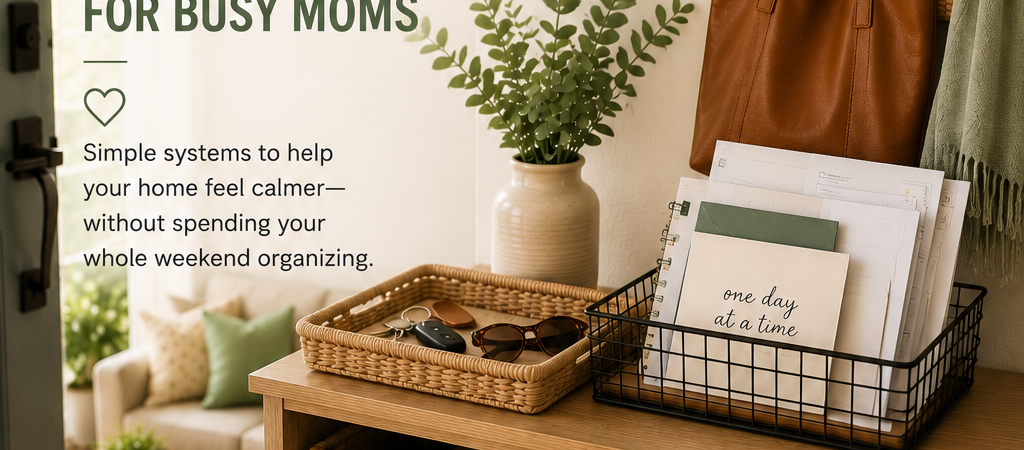
There are days when I look around the house and think…
“Where do I even start?”
Not because it’s terribly messy.
But because every room has one little thing waiting for me.
Shoes by the door.
Papers on the counter.
A basket of clean laundry.
Toys under the coffee table.
A water bottle someone forgot upstairs.
None of it feels overwhelming on its own.
Together…
It makes the whole house feel heavier.
For a long time, I thought getting organized meant waiting until I had an entire Saturday free.
I’d tell myself:
“This weekend, I’ll finally organize everything.”
Then Saturday came.
Someone needed breakfast.
Laundry piled up.
We had errands to run.
Dinner still had to be made.
By the end of the day, I had organized half a closet—and somehow the rest of the house looked even messier.
One morning, after spending five minutes looking for my keys, I finally found them buried under a pile of school papers.
That was the moment I realized I didn’t need a cleaner house. I needed simpler systems that made everyday life easier.
Home organization isn’t about finding more hours in the day.
It’s about creating small systems that quietly make everyday life easier.
Little changes that save you from searching for the same things, moving the same piles, and making the same decisions over and over again.
The best part?
You don’t need expensive organizers or an entire weekend to begin.
If you’re looking for realistic home organization ideas that fit into a busy life, these are the simple systems that have helped my home feel calmer—even when life isn’t.
Why Home Organization Doesn’t Have to Be Perfect
It’s easy to scroll through social media and think everyone else’s home stays spotless.
Perfect pantries.
Perfect labels.
Perfect playrooms.
Real life usually doesn’t look like that.
Especially when you have children.
Especially when you’re balancing work, meals, appointments, laundry, and everything else that fills a day.
The goal isn’t to make your house look perfect.
The goal is to make your home easier to live in.
A simple basket by the door that your family actually uses is far more valuable than an expensive organizing system nobody can keep up with.
A gentle system that fits your real life will always outlast a perfect one that feels impossible to maintain.
Decluttering, Organizing, and Maintaining Your Home
One mistake I used to make was treating decluttering, organizing, and cleaning like they were all the same thing.
They’re connected, but each one has a different job.
Decluttering means deciding what no longer serves your family and letting it go.
Organizing means giving the things you keep an easy, permanent home.
Maintaining means using small reset routines to return those things to their homes.
If every drawer feels overflowing, buying more containers usually isn’t the answer.
Sometimes the first step is simply having a little less to manage.
Then you can create an organizing system that makes sense for what remains.
And once that system is in place, a few small reset habits can help you maintain it without constantly starting over.
15 Home Organization Ideas That Make Everyday Life Easier
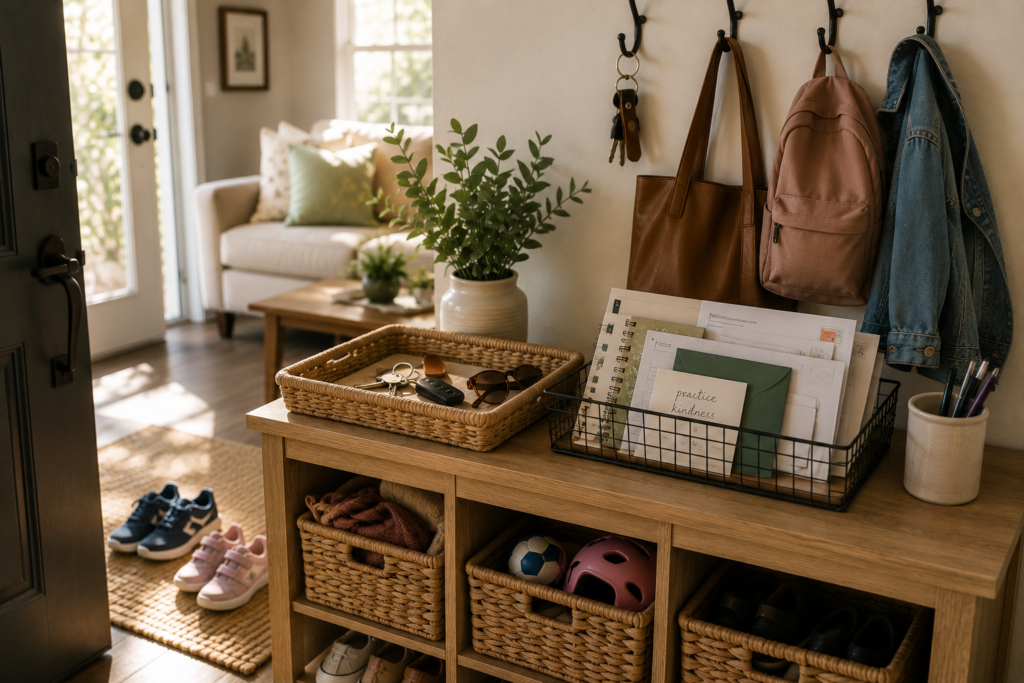
1. Create a Drop Zone Near the Door
One of my favorite home organization ideas is creating one place where everyday items can land.
You might use a small tray or basket for:
- Keys
- Wallets
- Sunglasses
Add hooks for backpacks, coats, or your purse if you have the space.
A shoe basket or simple mat nearby can help too.
You don’t need to buy an entire entryway system. Start with one basket or tray you already own and place it where your family naturally drops things.
It doesn’t have to look fancy.
It just needs to save you from asking:
“Has anyone seen my keys?”
2. Give Every Basket One Job
The word “miscellaneous” usually becomes another word for clutter.
Instead, try giving each basket one clear purpose.
Library books.
Dog supplies.
Chargers.
Coloring books.
Winter accessories.
When a basket starts holding five unrelated categories, it becomes harder to find anything inside it.
Choose one basket that already feels messy. Empty it, decide what its main job should be, and return only the things that belong in that category.
When everyone knows what goes inside, cleanup becomes much easier.
3. Use Clear Containers Where They Help
Clear containers can be helpful in places where you regularly forget what you already have.
They work especially well for:
- Pantry staples
- Individually wrapped snacks
- Craft supplies
- Small bathroom products
- Extra school supplies
But you don’t need to replace every container in your home.
If seeing everything creates more visual clutter for you, use solid baskets with simple labels instead.
Before buying anything new, try repurposing a clear food container, jar, or storage box you already own.
The goal is not to create a picture-perfect pantry.
The goal is to make it easier to find what you need and avoid buying duplicates.
If your pantry is one of the areas that feels especially difficult to manage, try this five-minute pantry reset before reorganizing the entire space.
If your kitchen tends to become the landing place for backpacks, lunch containers and school papers, you don’t need to organize the entire room at once. My 10-minute school-night kitchen reset gives you a simple evening routine for clearing the most-used areas and making tomorrow morning feel a little easier.
4. Reset One Counter Every Evening
You don’t have to organize the whole kitchen before bed.
Choose one surface.
Maybe it’s the kitchen island.
Maybe it’s your coffee station.
Maybe it’s the bathroom vanity.
Put away anything that already has a home, remove obvious trash, and leave the rest for another day if you need to.
That one clear surface can change how the entire room feels the next morning.
Tonight, choose the counter you see first when you begin your day.
Start there.
5. Create a Home for Paper
Permission slips.
Receipts.
School papers.
Mail.
Paper has a way of quietly spreading across every available surface.
Instead of creating a complicated filing system, give incoming paper one place to land.
You might use:
- One basket on the counter
- A wall pocket near the door
- A folder for school papers
- A small tray for mail that needs attention
Try sorting that one collection point once or twice a week.
The system doesn’t have to manage every paper forever.
It only needs to stop papers from taking over the kitchen while you decide what to keep, complete, or recycle.
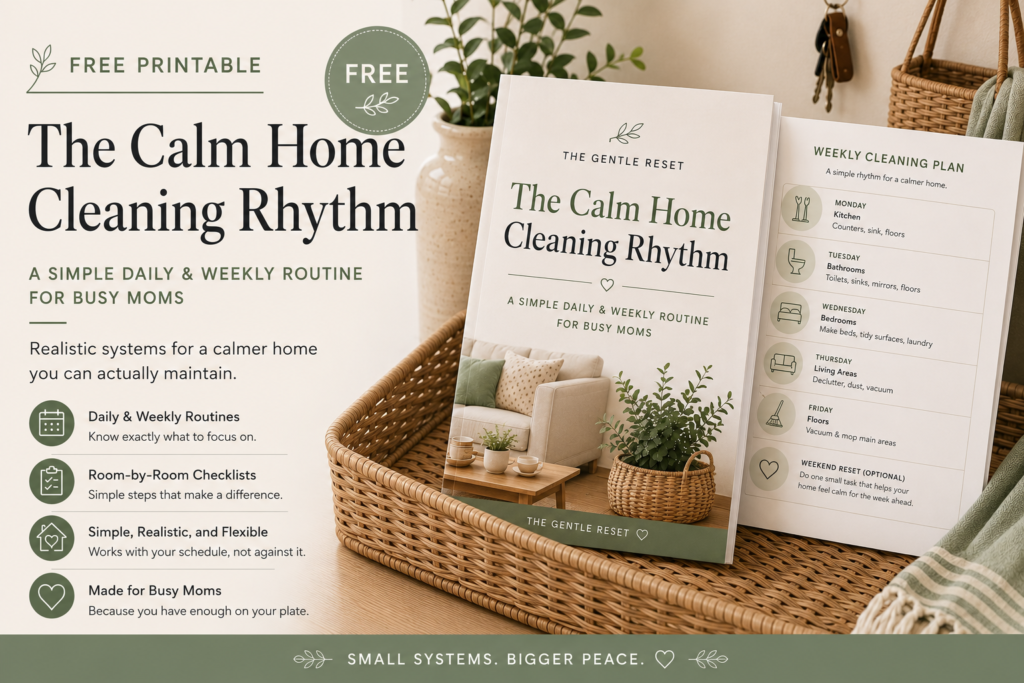
Free Cleaning Routine for Busy Moms
Getting organized is one part of creating a calmer home.
The next challenge is maintaining those simple systems without wondering what you should clean every day.
That’s why I created the FREE Cleaning Routine for Busy Moms.
Inside, you’ll find:
- A simple 5–10 minute daily cleaning routine
- A realistic weekly schedule
- Monthly reset tasks
- Gentle cleaning habits for busy family life
Instead of trying to remember everything, you’ll have a simple plan you can return to when you need it.
6. Organize by How Often You Use Things
The things you use every day should usually be the easiest to reach.
Keep lunch containers close to where you pack lunches.
Store coffee supplies together.
Place everyday dishes where family members can reach them safely.
Move special-occasion items to a higher shelf or less convenient cabinet.
You don’t need to reorganize the whole kitchen today.
Choose one routine that currently feels awkward.
Then ask:
“Could I move these items closer to where I actually use them?”
A small change can save dozens of unnecessary steps every week.
7. Keep a Donation Basket Ready
One habit that has helped me more than many large decluttering projects is keeping a donation basket tucked inside a closet.
Whenever I notice something we no longer use, I drop it into the basket instead of putting it back.
When the basket is full, I donate what’s inside.
This keeps clutter from slowly returning to drawers and closets.
You don’t need to walk through the whole house looking for things to remove.
Just let the basket collect items naturally as you notice them.
One shirt.
One toy.
One kitchen tool.
It all counts.
8. Store Like With Like
When similar items are scattered across several rooms, it’s easy to forget what you own.
Batteries.
Candles.
Gift bags.
Pet supplies.
Wrapping paper.
Try choosing one home for each category.
If you find batteries in three different drawers, gather them into one small container.
If gift bags are hiding in several closets, choose one place for them.
You don’t have to organize every category at once.
Start with the item you are always searching for.
9. Label the Things Your Family Uses
Labels aren’t only for making a pantry look Pinterest-perfect.
They can make it easier for everyone to put things away.
Even simple handwritten labels can help with:
- Toy baskets
- Snack bins
- School supplies
- Bathroom drawers
- Linen shelves
- Cleaning cloths
Only label the places where it solves a real problem.
If your family already knows where the towels belong, you probably don’t need a label.
But if toys are repeatedly placed in the wrong basket, a word label—or a simple picture label for younger children—may make cleanup easier.
The purpose is not perfection.
It’s fewer questions and less sorting for you.
10. Use Vertical Space in Small Rooms
When floor and cabinet space are limited, look up.
You may have unused space:
- Behind a pantry door
- Inside a bathroom cabinet
- Above the washing machine
- On the wall near the entryway
- On the back of a closet door
Hooks, small shelves, door organizers, or wall baskets can give everyday items a home without taking up more floor space.
You don’t need to fill every empty wall.
Choose one area where items constantly end up on the floor or counter. Then see whether a hook or small shelf could solve that specific problem.
If your closet is one of the spaces you’ve been avoiding, you don’t have to tackle it all at once. I put together a simple guide on organizing a closet with little space that walks you through a gentle 15-minute reset using what you already have.
11. Use Five-Minute Maintenance Resets
Organization usually doesn’t disappear all at once.
It slips a little at a time.
Shoes leave the drop zone.
Paper begins collecting beside the basket.
A few toys stay under the coffee table.
That’s why I prefer short maintenance resets over waiting for another big organizing day.
Set a timer for five minutes and return items to the homes you already created.
You are not reorganizing the room.
You are simply restoring the system.
Five minutes won’t finish everything.
But it may be enough to keep a small pile from becoming a much bigger one.
I have found that these tiny resets don’t just help my home feel calmer—they help my mind feel calmer too. If your evenings have been feeling especially overwhelming, you might enjoy my guide on 5 Tiny Evening Resets That Help Me Mentally Slow Down.
12. Keep Everyday Cleaning Supplies Together
Once an area is organized, basic cleaning is often part of maintaining it.
Keeping the products you use most in one portable caddy can make quick cleanups easier.
You might include:
- An all-purpose cleaner
- A microfiber cloth
- A small scrub brush
- Any product you use regularly
Use what you already have before buying a new caddy. A handled basket or small bucket can work just as well.
This isn’t about creating another organizing project.
It’s simply about avoiding a search through three rooms every time you need to wipe down a surface.
13. Simplify Before You Organize
Before buying another organizer, ask yourself:
“Do I actually need to keep all of this?”
Sometimes the best organizing tool isn’t another bin.
It’s having fewer things to manage.
Choose one overflowing drawer, shelf, or basket.
Remove anything that is:
- Broken
- Expired
- No longer used
- A duplicate you don’t need
- Better stored somewhere else
Then organize what remains.
You may discover that you already have enough space once the things you no longer use are gone.
14. Make Nighttime Part of Your Organization Routine
Some nights bedtime takes longer than expected.
Some nights everyone is tired.
Some nights I only manage to clear one counter.
And that’s okay.
A nighttime organization routine doesn’t need to mean walking through the entire house with a basket.
It can be as simple as:
- Returning shoes to the door
- Clearing one counter
- Tossing junk mail
- Putting away five things
- Preparing one item you’ll need tomorrow
Choose the task that will make tomorrow morning feel a little easier.
Even one small reset can help.
15. Organize for Your Family—Not for Social Media
Your organizing systems don’t have to impress anyone.
If baskets work better than matching bins…
Use baskets.
If hooks work better than closets…
Use hooks.
If your children are more likely to toss toys into one large basket than sort them into five small categories…
Use the large basket.
The best organization system is the one your family can naturally use on an ordinary day.
Not only when the house is quiet.
Not only after you have cleaned everything.
And definitely not only for a picture.
Home Organization on a Budget
Creating a more organized home doesn’t have to be expensive.
Before shopping for new storage, walk through your home and look at what you already have.
You might repurpose:
- Empty shoe boxes as drawer dividers
- Glass jars for small pantry items
- Gift boxes for office or craft supplies
- Baskets you already own
- Small cardboard boxes inside deep drawers
- Food-storage containers that have lost their lids
- Hooks left over from another project
You don’t need to make every storage solution match.
Organization isn’t about buying more.
It’s about making what you already own easier to use.
If You’re Feeling Overwhelmed, Start Here
You don’t need to begin with all 15 ideas.
Start with the option that matches what feels hardest today.
| If you’re… | Try this first |
|---|---|
| Feeling overwhelmed | Reset one counter |
| Short on time | Do one five-minute maintenance reset |
| Living in a small space | Look for one unused vertical area |
| Always losing everyday items | Create a drop zone near the door |
| Struggling with clutter | Start a donation basket |
| Tired of cleaning decisions | Download the free Cleaning Routine |
One small area is enough for today.
If you prefer having a simple time to revisit these spaces each week, use this Sunday reset checklist for busy moms. You can choose a low-energy reset, a 15-minute reset, or three priorities based on the time you have.
Frequently Asked Questions
Where should I start when organizing my home?
Start with one small area you use every day. A kitchen counter, entryway, or bathroom drawer will usually make a bigger difference than beginning with a space you rarely see.
How do I organize a house with too much stuff?
Declutter before buying more storage. Choose one drawer, basket, or shelf and remove what your family no longer uses. Then give everything you keep a specific home.
How can I organize a small home without buying more storage?
Use the space you already have more intentionally. Look behind doors, inside cabinets, and on unused walls. Repurpose boxes and baskets before purchasing new organizers.
What is the difference between decluttering and organizing?
Decluttering is deciding what you no longer need. Organizing is giving the items you keep an accessible home. Decluttering first often makes organizing much easier.
How do busy moms keep their homes organized?
Simple systems and short reset routines are usually more sustainable than large organizing projects. Focus on systems that are easy enough to use during a normal busy week.
How can I keep my home organized without cleaning for hours?
Spend a few minutes returning items to their designated homes each day. A simple cleaning routine can then help you maintain the space without deciding where to begin every time.
One Small Reset at a Time
Home organization isn’t about having a picture-perfect house.
It’s about making everyday life feel a little lighter.
One basket.
One drawer.
One counter.
One small reset at a time.
Because calm doesn’t usually come from doing everything.
It often comes from making one small thing easier.
And when your home and mind both feel like they need a little closure at the end of the day, you may enjoy The Night Reset System.
It combines a simple evening routine with guided journal pages and gentle reflection to help you close the mental loop, reset your space, and end the day feeling a little more settled.